SecFund Invests in Fiducial: Delft-Based Computer Vision Software for Autonomous Drone Interception
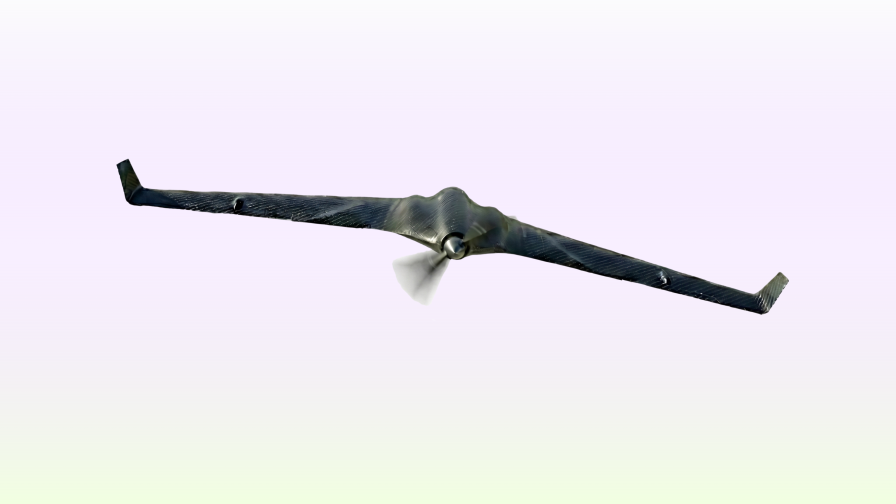
A funding round of over €2 million is supporting a Dutch computer vision startup whose technology enables drones to autonomously navigate and operate in environments where GPS and radar fall short. The technology also offers broad civilian use cases, including industrial inspection.
Fiducial, a Delft-based startup developing computer vision software for autonomous drone platforms and detection systems, has raised more than €2 million in total. The round is led by Graduate Ventures and SecFund, complemented by a loan from Rabobank. With this funding, Fiducial strengthens its position as a technology partner to both European drone manufacturers and leading civilian customers.
Founded by a team largely composed of TU Delft alumni, Fiducial develops software capabilities that allow drones to operate in environments where conventional systems are constrained or fail altogether. The technology has been validated under combat conditions and is now being integrated by drone partners active along Europe’s front lines.
From Inspection Software to Defence Technology
Fiducial originated in 2022 as a student project focused on computer vision for industrial inspection. The founders developed a method to determine camera positions with millimetre-level accuracy using physical reference objects—so-called “fiducials,” from which the company derives its name. A major European aircraft manufacturer is among the users of this technology, in which Graduate previously invested at the pre-seed stage.
In early 2025, the team expanded the application of its computer vision software into the defence domain. Developments in Ukraine, combined with the growing awareness that Europe must reinforce its own defence capabilities, prompted Fiducial to extend its technology to enable both the control and interception of drones.
Precision First, Not AI-First
Fiducial explicitly differentiates itself from many other providers by not relying primarily on artificial intelligence. Its software is built on classical computer vision, 3D vision and spatial geometry—a mathematical foundation that is predictable, verifiable and explainable. AI is applied only where it demonstrably delivers superior results, rather than as a marketing label.
The limited availability of training data also plays a key role in this approach. In Fiducial’s view, operators must be able to trust systems whose behaviour they can anticipate under pressure. As a result, the Delft startup deliberately opts for a hybrid approach combining classical methods with AI, rather than committing to a single paradigm.
Three Core Capabilities, One Closed Defence Loop
Fiducial’s drone-focused solution consists of three capabilities that operate independently but together form a closed defensive loop. The first, Chain Home, provides distributed detection through a network of passive visual and thermal sensors. Unlike traditional radar systems—which emit active signals and therefore become detectable targets themselves—these sensors only observe and remain invisible. Because detection is distributed across multiple sensors, the system remains operational even if one sensor is disabled.
The second capability, Pathfinder, enables precise positioning of aerial platforms without GPS, using sideways-facing visual odometry and terrain recognition. The third, Intercept, delivers onboard autonomy software that allows drone partners to detect, track and intercept aerial threats. The software runs on lightweight compute chips onboard the drone and is platform-agnostic, enabling incremental adoption without vendor lock-in.
Integration Focus, with an Eye on Civilian Applications
In the short term, Fiducial is focused on scaling existing customer integrations and converting pilot contracts into larger orders. Over the medium term, the company aims to expand its product line with additional autonomous capabilities. Longer term, Fiducial also clearly sees applications beyond defence. Technology validated at the front line can be translated to civilian domains, including the protection of critical infrastructure.
Fit with the Graduate Portfolio
For Graduate Ventures, the investment aligns with its focus on deeptech startups emerging from the TU Delft ecosystem that can make a meaningful contribution to the strategic capabilities of the Netherlands and Europe.
According to Graduate Ventures, Fiducial demonstrates what becomes possible when deep technical expertise, entrepreneurship and societal urgency come together. “The team combines world-leading computer vision expertise with a sharp understanding of what is actually required at the front line,” the investment fund states. “This is exactly the type of founding team we aim to back at an early stage and help scale through our network of experienced entrepreneurs.”
SecFund, which co-finances the round, supports startups, scale-ups and innovative SMEs that contribute to the innovation needs of the Dutch Ministry of Defence. The fund is a collaboration between the Ministry of Defence, the Ministry of Economic Affairs and the Regional Development Agencies, united in ROM-Nederland. The Brabant Development Agency (BOM) manages the fund on behalf of all regional development agencies. Rabobank participates in the round as a debt financier.


